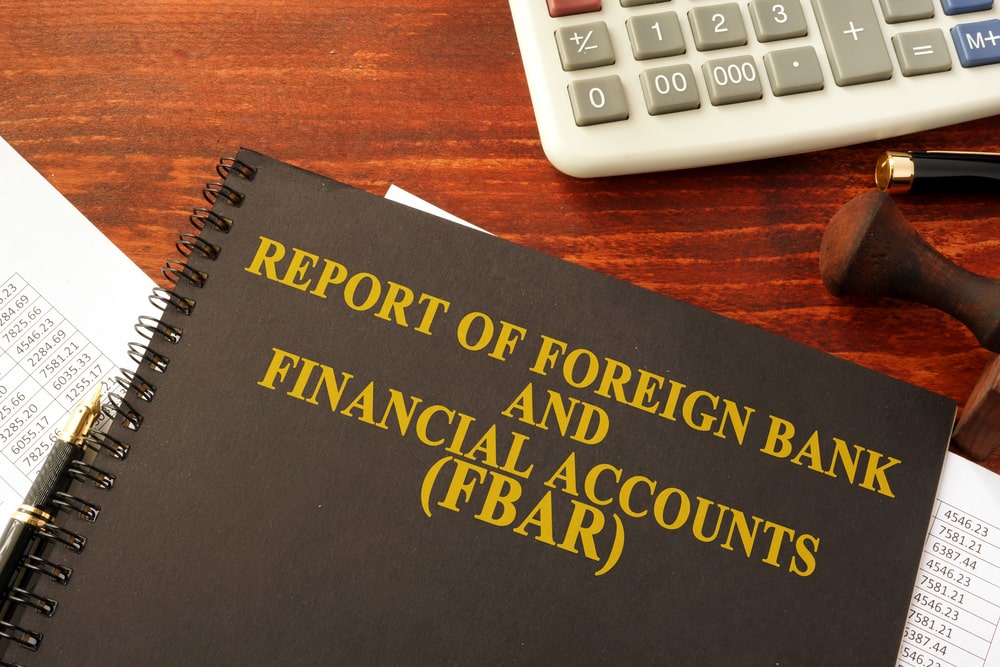
FBAR, or FinCEN Form 114, is not filed with your tax returns. It is a separate report submitted to the Treasury Department's Financial Crimes Enforcement Network (FinCEN). The government uses this information to identify offshore tax evasion and monitor compliance with tax treaties.
You are required to file an FBAR if you meet these conditions:
This rule applies to many types of accounts held in a foreign country, including:
The FBAR filing deadline is April 15, with an automatic extension to October 15 if you miss the initial date. You must file the FBAR electronically using the BSA E-Filing System, managed by FinCEN—it cannot be filed with your tax return.
You must report the maximum value of each foreign financial account during the calendar year, along with complete information about the financial institution. This applies to every account where you have financial interest or signature authority, even if the account belongs to an employer or is tied to a governmental entity.


The IRS offers several programs for taxpayers who need to correct FBAR filing issues. Which option is right for you depends on whether your non-compliance was willful, whether you reported all foreign income, and your overall tax situation.
Streamlined Filing Compliance Procedures: The most common path for non-willful FBAR violations. The Streamlined Domestic Offshore program is for U.S. residents who failed to report foreign financial assets, while the Streamlined Foreign Offshore program serves qualifying non-residents. Both programs offer reduced penalties compared to standard IRS enforcement.
Delinquent FBAR Submission Procedures: If you properly reported all income from your foreign accounts but simply missed the FBAR filing requirement, you may qualify for delinquent submission with no penalties. This procedure requires a statement explaining why your FBARs are late.
Reasonable Cause Relief: The IRS may waive FBAR penalties if you can demonstrate reasonable cause for failing to file. Common grounds include reliance on incorrect professional advice, serious illness, or circumstances beyond your control.
Voluntary Disclosure Program: For situations involving willful non-compliance or potential criminal exposure, voluntary disclosure allows you to come forward before the IRS discovers your accounts. This program involves higher penalties but provides protection against criminal prosecution.
Ignoring FBAR reporting requirements can lead to serious consequences:
Non-Willful Violations: Up to $10,000 per account, per year. For taxpayers with multiple accounts over several years, penalties can quickly reach $50,000-$100,000 or more.
Willful Violations: The greater of $100,000 or 50% of the account balance per violation. The IRS can also pursue criminal charges with fines up to $250,000 and imprisonment up to 5 years.
Additional Consequences: Tax penalties on unreported income from foreign accounts, heightened IRS scrutiny of all your tax filings, and potential referral for criminal investigation.
Our tax attorneys focus on resolving international tax problems, from foreign financial accounts and foreign income reporting to tax treaty provisions. We understand the specific issues affecting Traverse City residents with connections abroad—whether through vacation properties in Canada, family accounts overseas, or business interests in other countries.
We work to reduce your penalty exposure with strategies built for your circumstances. Our experience with both FinCEN and the IRS helps us identify the best path to compliance, whether through streamlined procedures, delinquent FBAR submission, or another approach.

We start with an in-depth review of your foreign bank accounts, past tax returns, and filing history. This consultation helps us determine your compliance status, identify which years require FBAR filings, and uncover potential issues.
We develop a customized compliance strategy based on your situation. We determine whether streamlined filing, delinquent FBAR submission, reasonable cause relief, or voluntary disclosure is most appropriate for your circumstances, and explain the likely timeline and outcomes for each option.
We handle or coordinate all filings and communications with the IRS and FinCEN on your behalf, respond to any inquiries, and negotiate penalty reductions when applicable.
Our objective is to bring you into full compliance while minimizing penalties and stress. Once resolved, you'll have clear documentation and understand your ongoing FBAR filing requirements to stay compliant going forward.
Our Traverse City FBAR attorneys bring focused expertise to your international tax issues:
Most clients never need to meet with the IRS personally; we handle all communications on your behalf.
Each year of delayed filing increases your potential penalty exposure, and the IRS has made foreign account enforcement a priority.
Contact our Traverse City FBAR attorneys at (248) 262-3400 for a free case review. We'll assess your foreign account reporting obligations, explain your options, and help you resolve any outstanding issues with the IRS.